
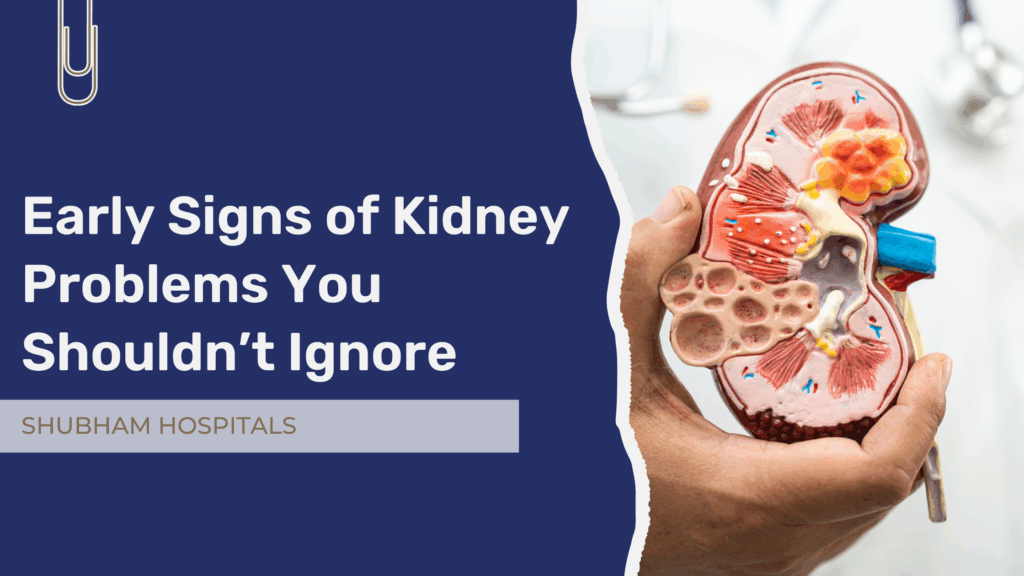
Our kidneys are small but powerful organs that filter waste, balance body fluids, control blood pressure, and keep our bodies healthy. Unfortunately, kidney problems often go unnoticed until they become serious. This is why recognizing the early signs of kidney disease is crucial for timely treatment.
At Shubham Hospitals, our expert nephrology team is committed to helping you detect and manage kidney issues before they cause long-term damage.
Why Early Detection of Kidney Problems Matters
Kidneys work silently, and damage can progress without obvious symptoms in the early stages. If diagnosed early, kidney disease can be slowed, managed, or even prevented from worsening. Regular health checkups and awareness of warning signs are your first line of defense.
1. Swelling in Feet, Ankles, or Hands
Why it happens: When your kidneys aren’t functioning properly, excess fluid builds up in your body, leading to edema(swelling).
What to look for:
- Puffiness in feet and ankles, especially in the morning or after sitting for long hours.
- Tightness in shoes or socks.
- Swelling in the hands or around the eyes.
When to consult a doctor: If you notice persistent swelling without an injury or another obvious cause, visit a nephrologist for evaluation.
2. Unexplained Fatigue and Weakness
Why it happens: Kidneys help produce erythropoietin, a hormone that stimulates red blood cell production. If your kidneys are damaged, this hormone level drops, leading to anemia and fatigue.
What to look for:
- Feeling tired even after resting well.
- Shortness of breath during mild activity.
- Difficulty concentrating or staying alert.
Shubham Hospitals’ tip: Persistent fatigue could be more than just stress—get your kidney function checked.
3. Changes in Urine Pattern or Appearance
Why it happens: Kidneys filter waste and extra fluids from your blood, producing urine. Any change in kidney function affects urine output and appearance.
Signs to watch:
- Frequency: More or less urination than usual, especially at night.
- Color: Foamy, dark brown, red, or tea-colored urine.
- Pain: Burning sensation or discomfort while urinating.
Note: Blood in urine (hematuria) is a serious sign and should not be ignored.
4. High Blood Pressure (Hypertension)
Why it happens: Kidneys regulate blood pressure by balancing salt and water in the body. Damaged kidneys may cause fluid retention and hormonal changes, leading to hypertension.
Warning signs:
- Headaches or dizziness.
- Nosebleeds.
- Consistently high BP readings despite lifestyle changes.
Shubham Hospitals’ advice: Hypertension and kidney disease often go hand-in-hand. If you have high BP, regular kidney screening is essential.
5. Loss of Appetite and Nausea
Why it happens: Waste buildup in the blood (uremia) can make you feel nauseous and reduce your appetite.
What to look for:
- Feeling full quickly.
- Unexplained weight loss.
- Metallic taste in the mouth.
6. Muscle Cramps and Restless Legs
Why it happens: Imbalanced electrolyte levels (like calcium, potassium, and sodium) due to kidney issues can cause muscle cramps.
When to act: Frequent cramps or restless legs, especially at night, should prompt a kidney function test.
The Role of Early Screening
Early screening helps identify kidney disease before symptoms become severe. Recommended tests include:
- Blood Test: Creatinine and eGFR (estimate kidney function).
- Urine Test: Check for protein or blood.
- Blood Pressure Monitoring: Keep hypertension under control.
How Shubham Hospitals Can Help
At Shubham Hospitals, our nephrology services include:
- Comprehensive kidney function testing.
- Management of acute and chronic kidney disease.
- Dialysis support for advanced cases.
- Preventive health checkups for high-risk patients (diabetics, hypertensives, family history of kidney disease).
Our team of experienced nephrologists uses advanced diagnostic tools to ensure accurate detection and personalized treatment plans.
When to See a Kidney Specialist Immediately
Seek medical help if you experience:
- Persistent swelling in feet or face.
- Significant changes in urine color or output.
- Unexplained high blood pressure.
- Sudden onset of nausea, vomiting, or extreme fatigue.
Prevention Tips for Healthy Kidneys
- Stay Hydrated: Drink adequate water, unless restricted by your doctor.
- Eat a Balanced Diet: Limit salt, processed foods, and excess sugar.
- Control Blood Pressure & Blood Sugar: Especially important for diabetics.
- Avoid Overuse of Painkillers: NSAIDs can harm the kidneys if taken in excess.
- Get Regular Checkups: Especially if you have risk factors.
Conclusion
Kidney health is vital for overall well-being, and early detection can make a life-changing difference. Don’t ignore symptoms like swelling, fatigue, urine changes, or high BP.
At Shubham Hospitals, we are committed to providing expert nephrology care with compassion and precision. Our advanced facilities and experienced doctors ensure that your kidneys get the attention they deserve.
Your kidneys silently work for you—let’s protect them together.
Book your kidney screening at Shubham Hospitals today!
Leave a reply















Leave a reply